
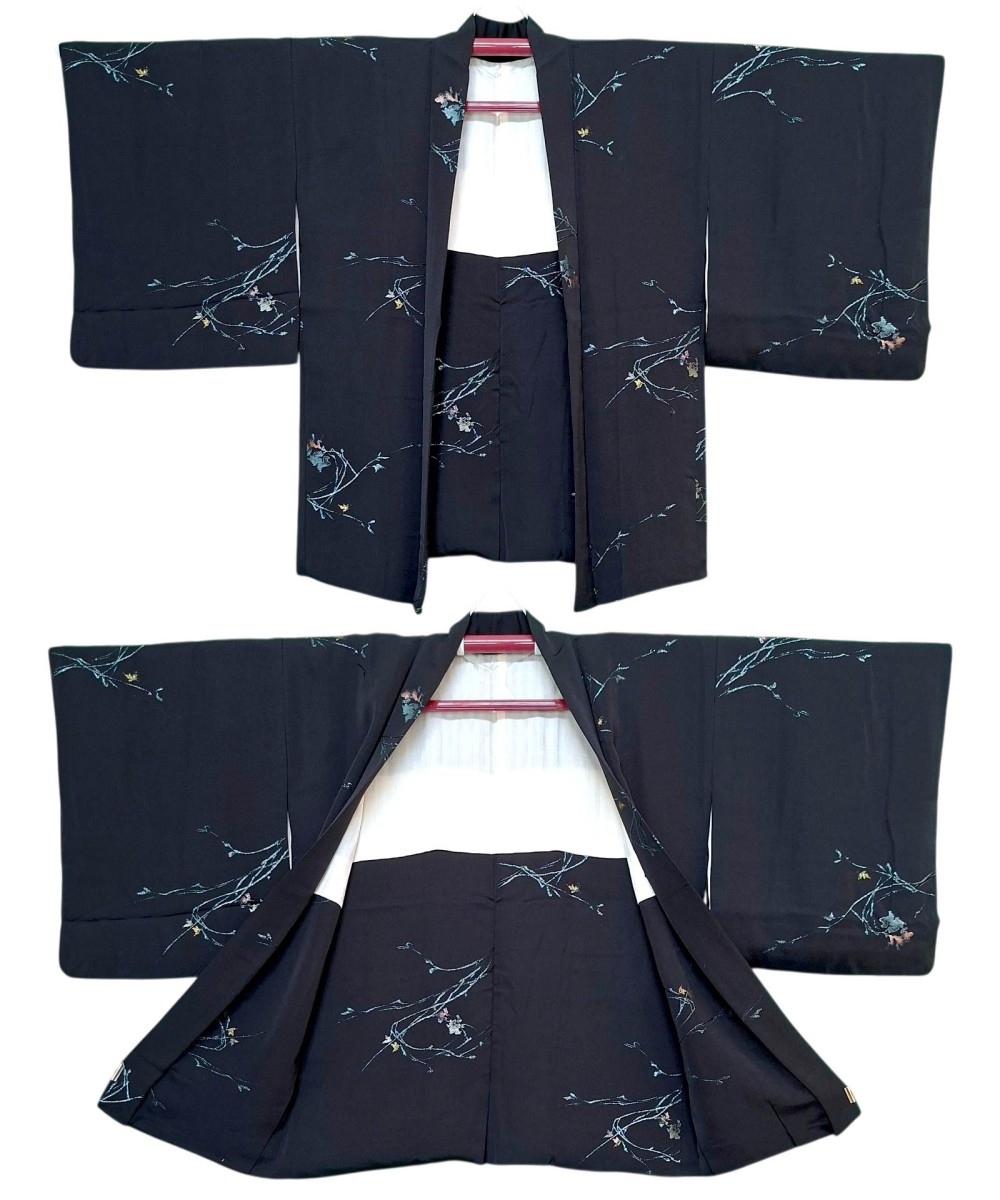

Haori kimono jacket with iridescent threads and Kamon
- In Stock
- Brand: Bottega-Giapponese
- Product Code: H2182
-
€89.00
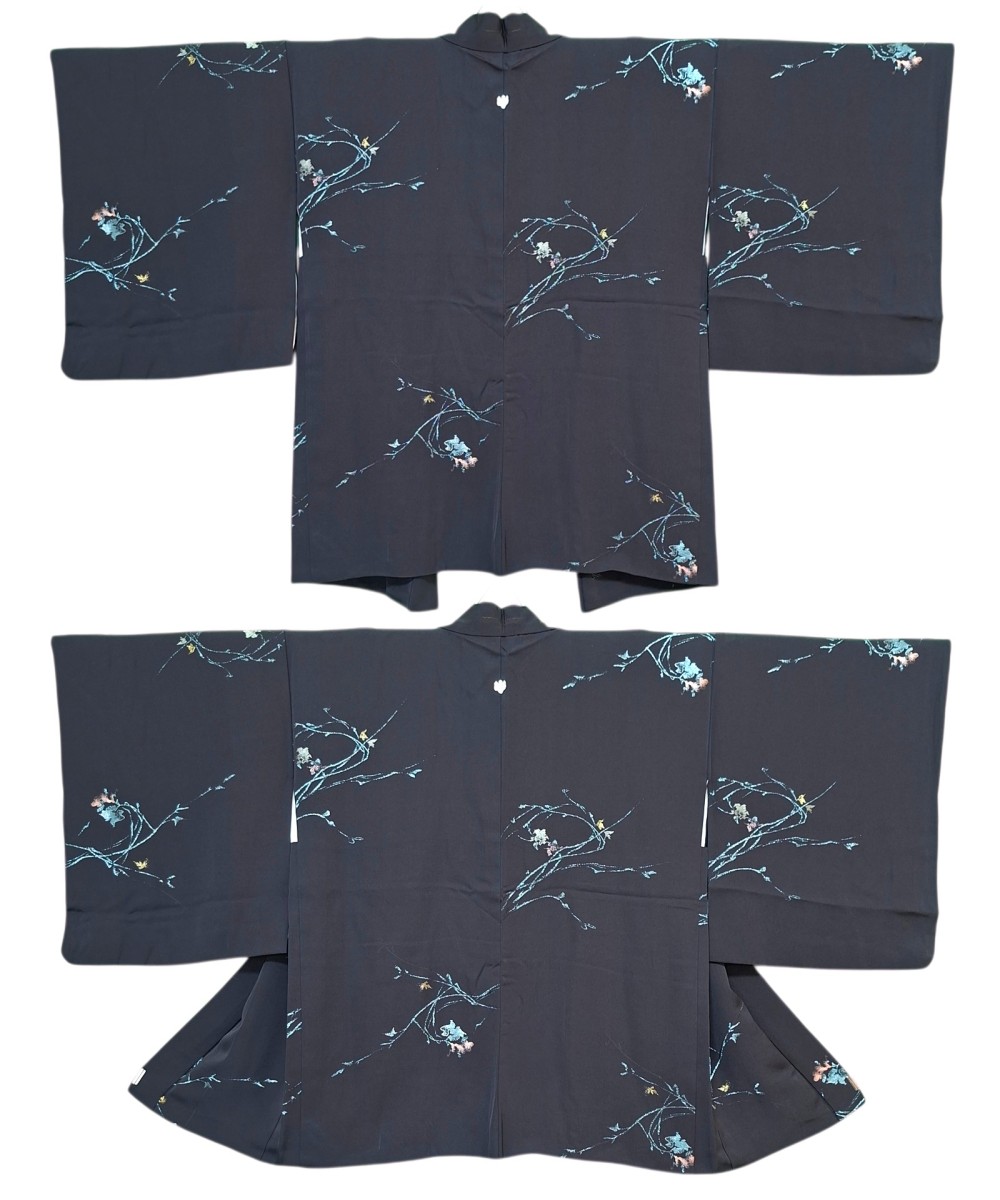
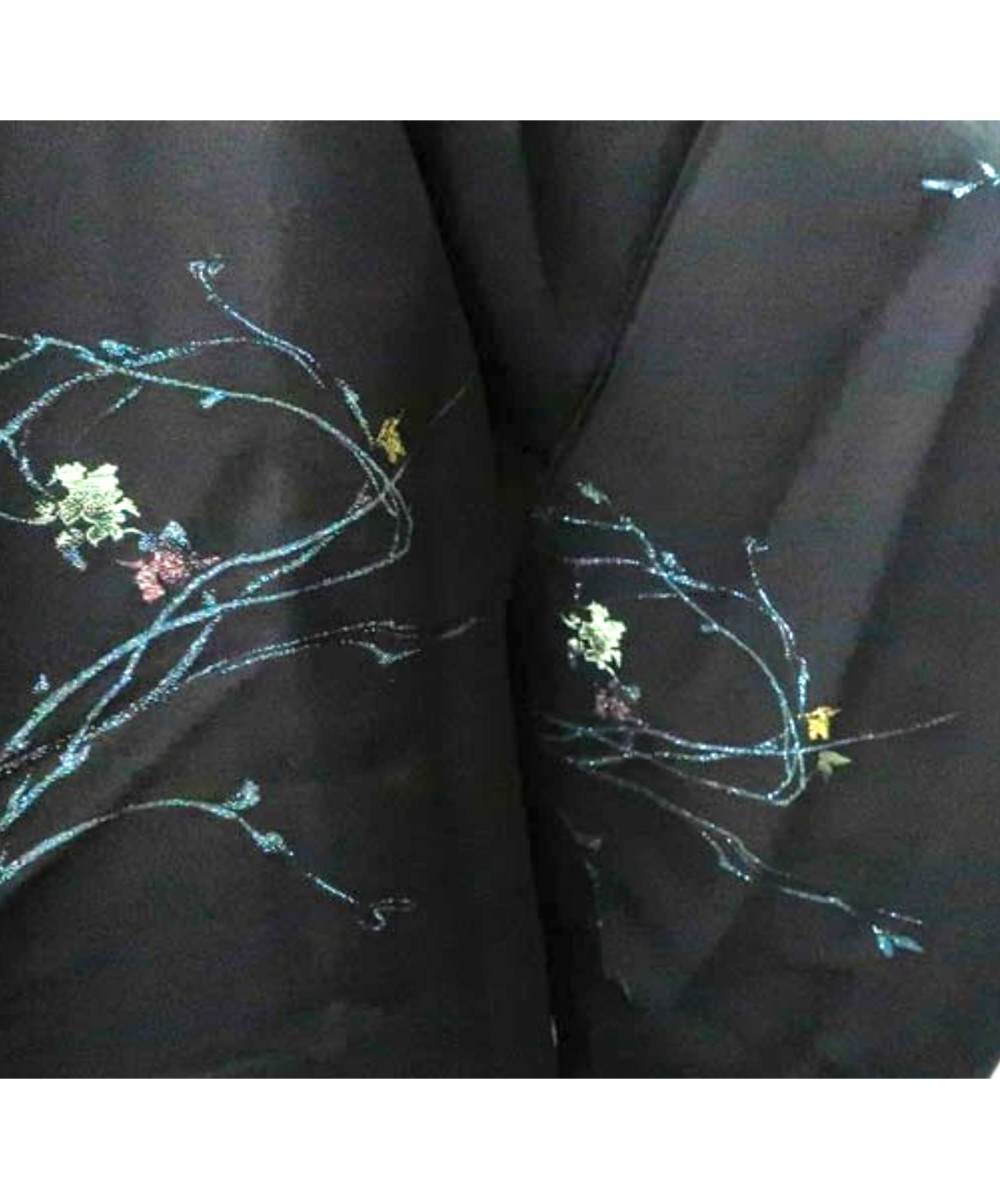
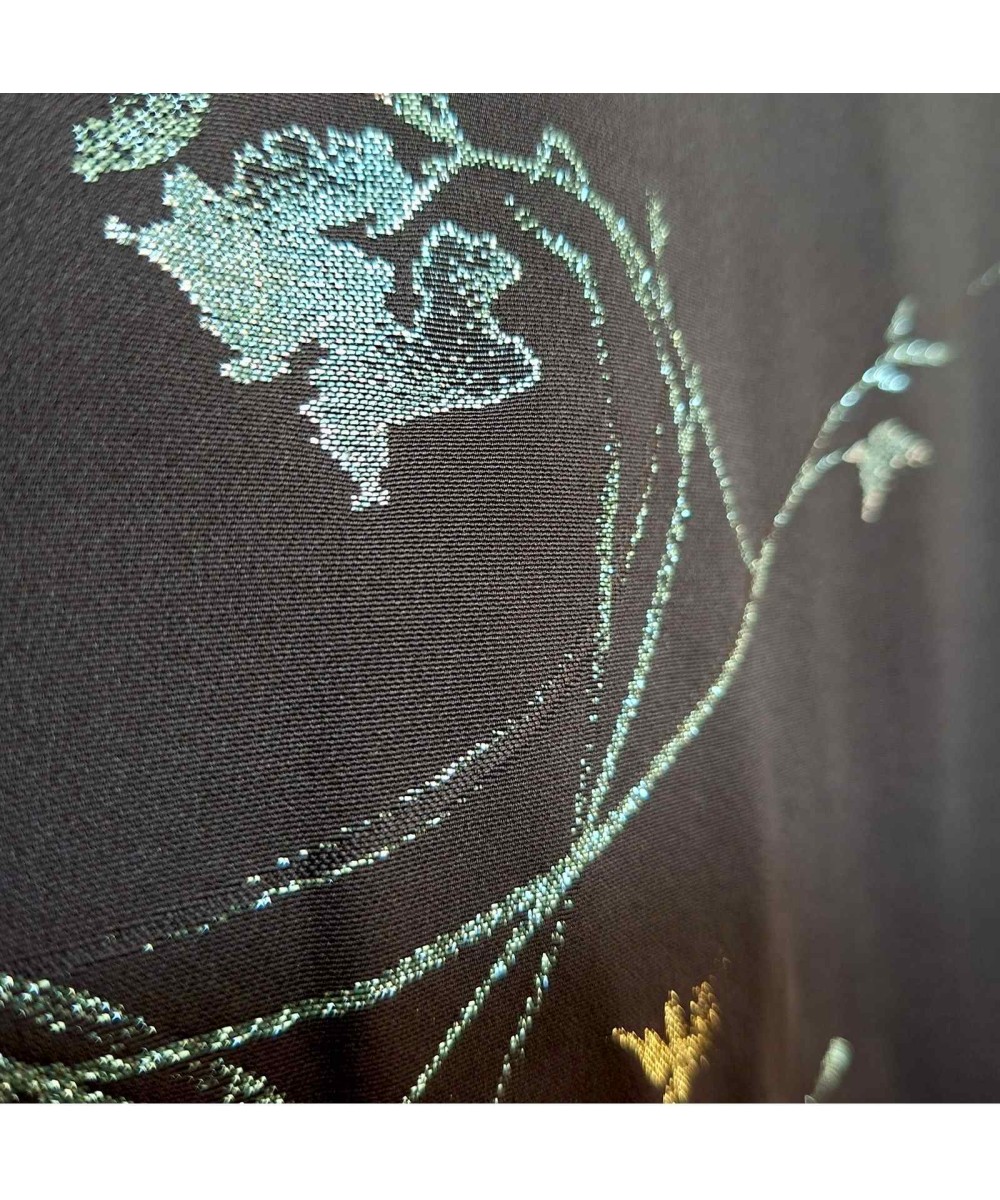
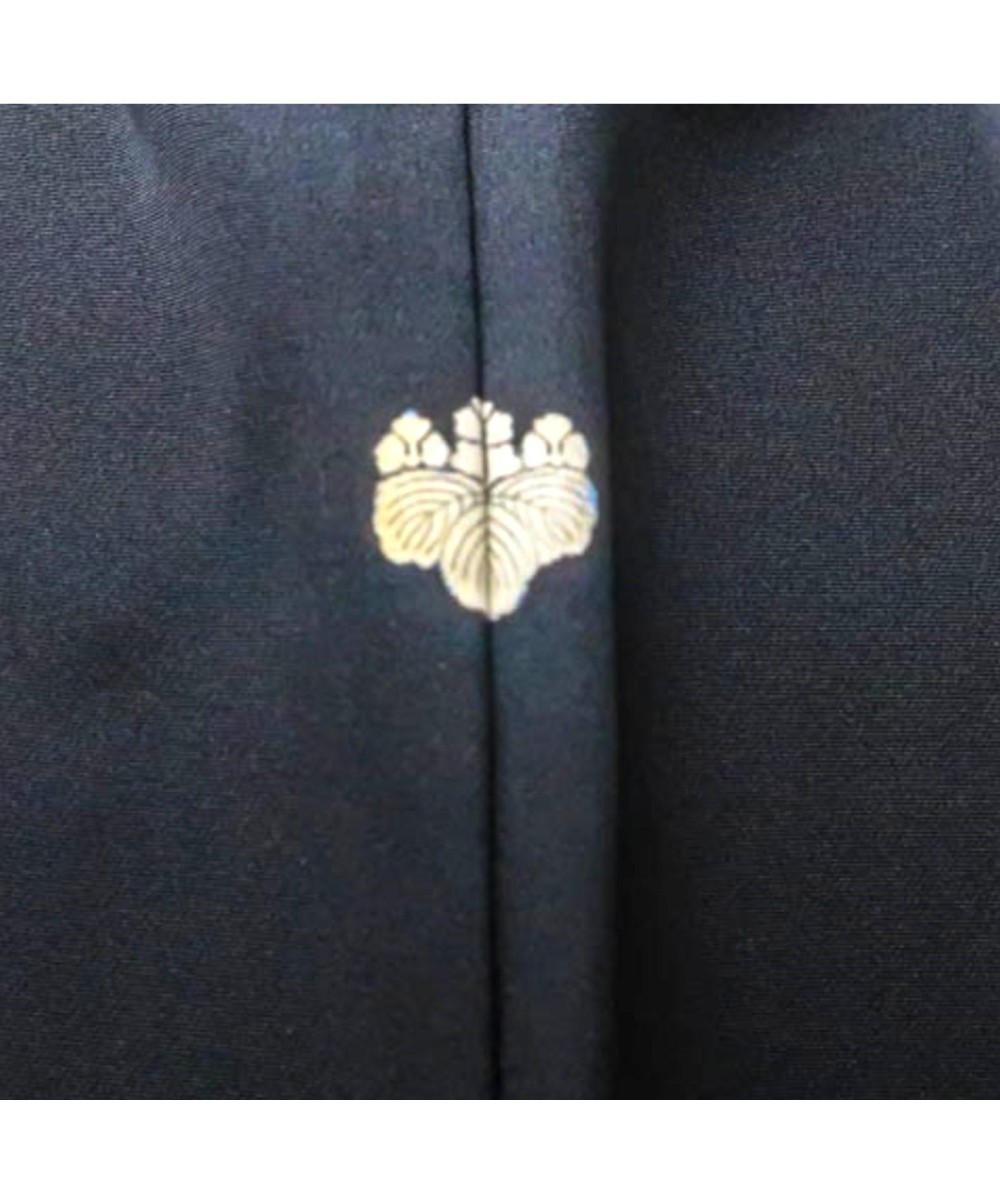
HAORI A black jacket made of fine silk, adorned with a striking embroidered composition—featuring silver, blue, and gold threads—of abstract flowering branches (inspired by Japanese blossoms) that extends elegantly across various parts of the haori. On the back, there is an authentic embroidered family crest (kamon).
Measurements: Length 75 cm - Shoulders 60 cm - Sleeve length 33 cm - Sleeve width 46 cm. (See photo for reference measurements.)
Garment condition: Authentic vintage garment in very good condition.
Note: The "haori-himo" cords to keep it tied NOT included.
What is a haori?
The haori is a traditional Japanese jacket, a tailored covering characterized by the classic T-shape typical of the kimono, although it is shorter than the kimono.
Unlike the kimono, the haori does not feature overlapping closures: it is traditionally worn open or tucked in at the front, joining the two pieces with small decorative cords called haori himo.
The variety of weaves: it can be made of smooth silk, crepe (chirimen), or damask (rinzu), and embellished with exquisite hand-embroidered designs.
How to Wear Your Haori
The beauty of the haori is its versatility. Here are some tips for integrating it into your style:
Casual Look: Wear it open over a white t-shirt and jeans for a modern and elegant contrast.
Formal Look: Slip it over a little black dress or an evening gown to replace the classic blazer with something unique.
Accessories: Traditionally, it closes at the front with himo laces, but you can leave it open to highlight the interior decoration or the shirt underneath.
Care and Maintenance (Vintage Silk)
Because it is a precious piece of natural silk, it requires some care:
Washing: We recommend dry cleaning only at specialized centers.
Ironing: If necessary, iron at low heat, placing a cotton cloth between the iron and the silk. Do not use steam.
Storage: Store hung or folded in a dry place, away from direct sunlight.
*Click here to find out more.
Latest


BENTO BOX with a design covered in fabric, lacquered, with a design that reproduces flowers and..
€39.90


BENTO BOX with a fabric-covered, lacquered design, with a design that reproduces cherry blossoms. Th..
€39.90

BENTO ONIGIRI HOLDER to carry onigiri, "triangular blocks of rice", on the lid there is a drawi..
€13.90


BENTO BOX with a design that reproduces the traditional style of the wooden bento with a wood g..
€39.90


MANGAKA PENS Kuretake Cartoonist Zig Mangaka, set of 8 black pens with tips of different sizes,..
€24.90


MANGAKA PENS Kuretake Cartoonist Zig Mangaka, The characteristic is that it does not smudge eve..
€14.90

MANGAKA PENS Kuretake Cartoonist Zig Mangaka, set of three black pens of 3 sizes, The characteristic..
€8.90
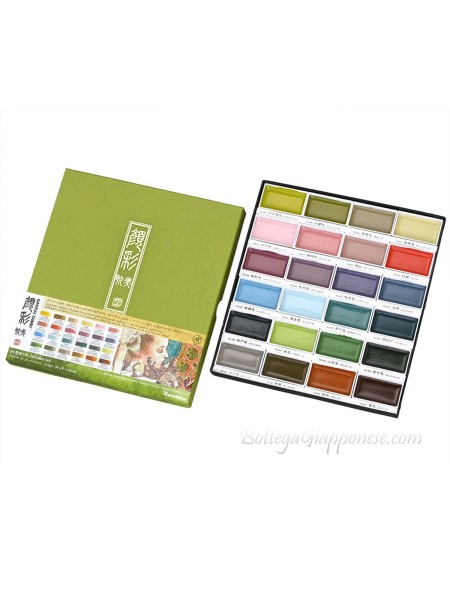

WATERCOLOR SET This is a series of new colors inspired by the Art Nouveau style, Kuretake Gansa..
€43.90

DRAGON figurine. The dragon figure is depicted with a jewel sphere with a lucky ideogram.In Japanese..
€13.90


NOREN Japanese curtain umbrella with cherry petals design. Used for doors but can be applied to..
€34.90


NOREN Japanese ukiyo-e curtain with crane design symbolizing long life in flight. Used for door..
€34.90

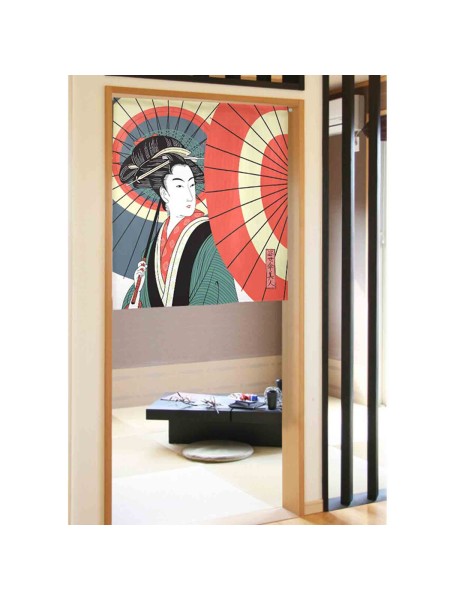
NOREN Japanese ukiyo-e curtain with woman with umbrella drawing. Used for doors but can be applied t..
€34.90


MAGEWAPPA BENTO Made entirely of cedar wood and treated with natural protective lacquer, the be..
€43.90


Shodō fude fude brush for the art of Japanese Shodō calligraphy and writing. Brush suitable for vari..
€4.90