

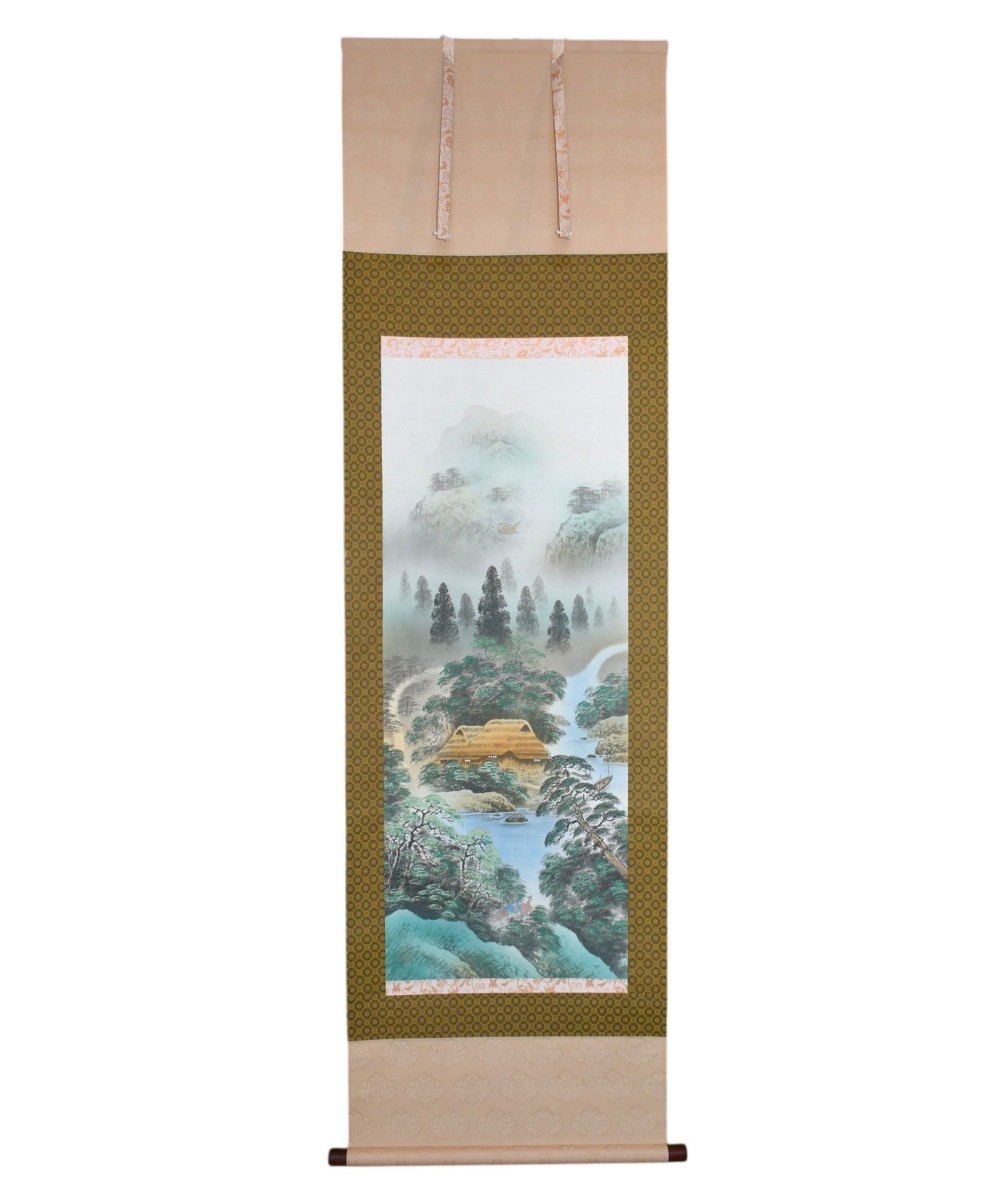
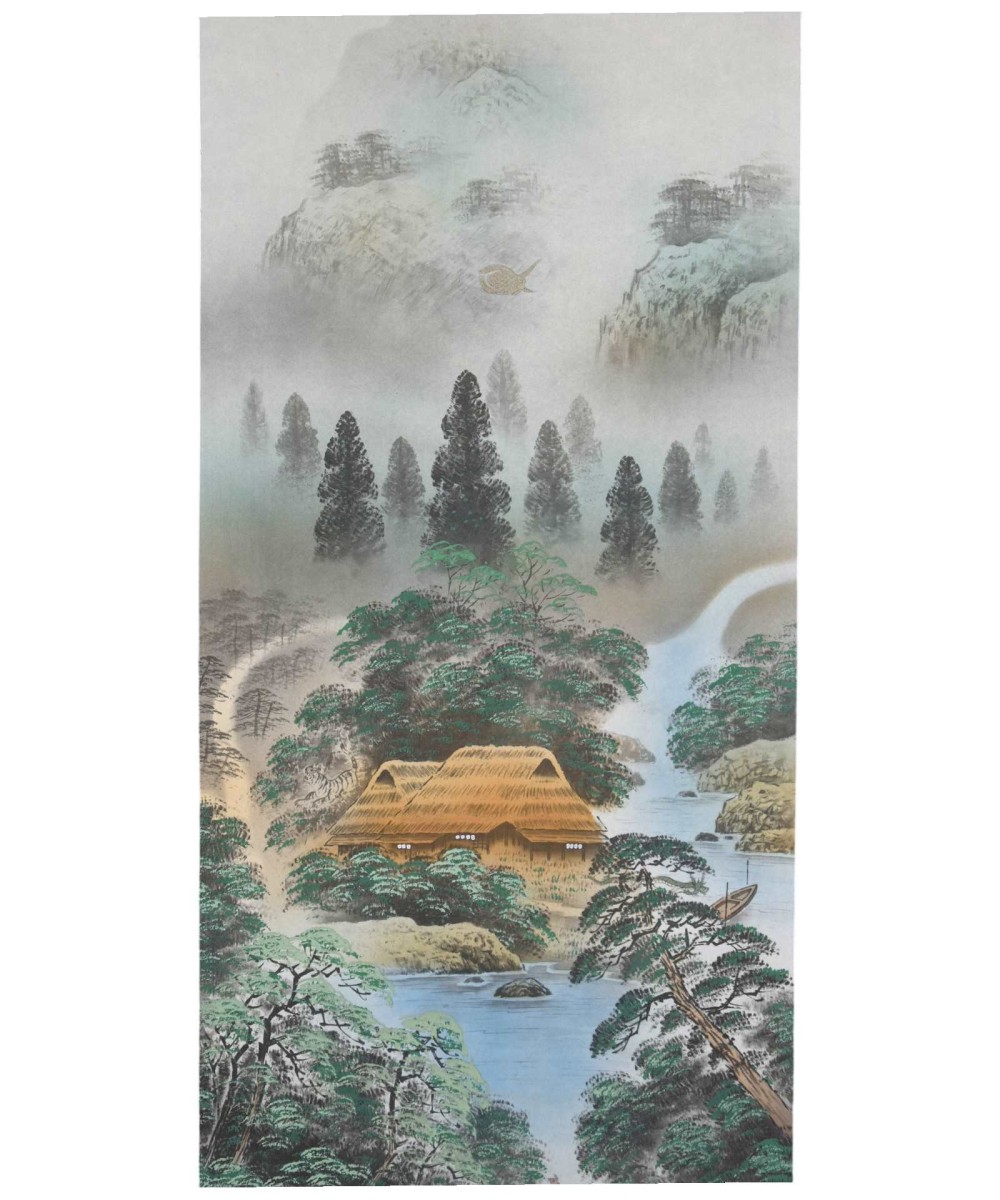
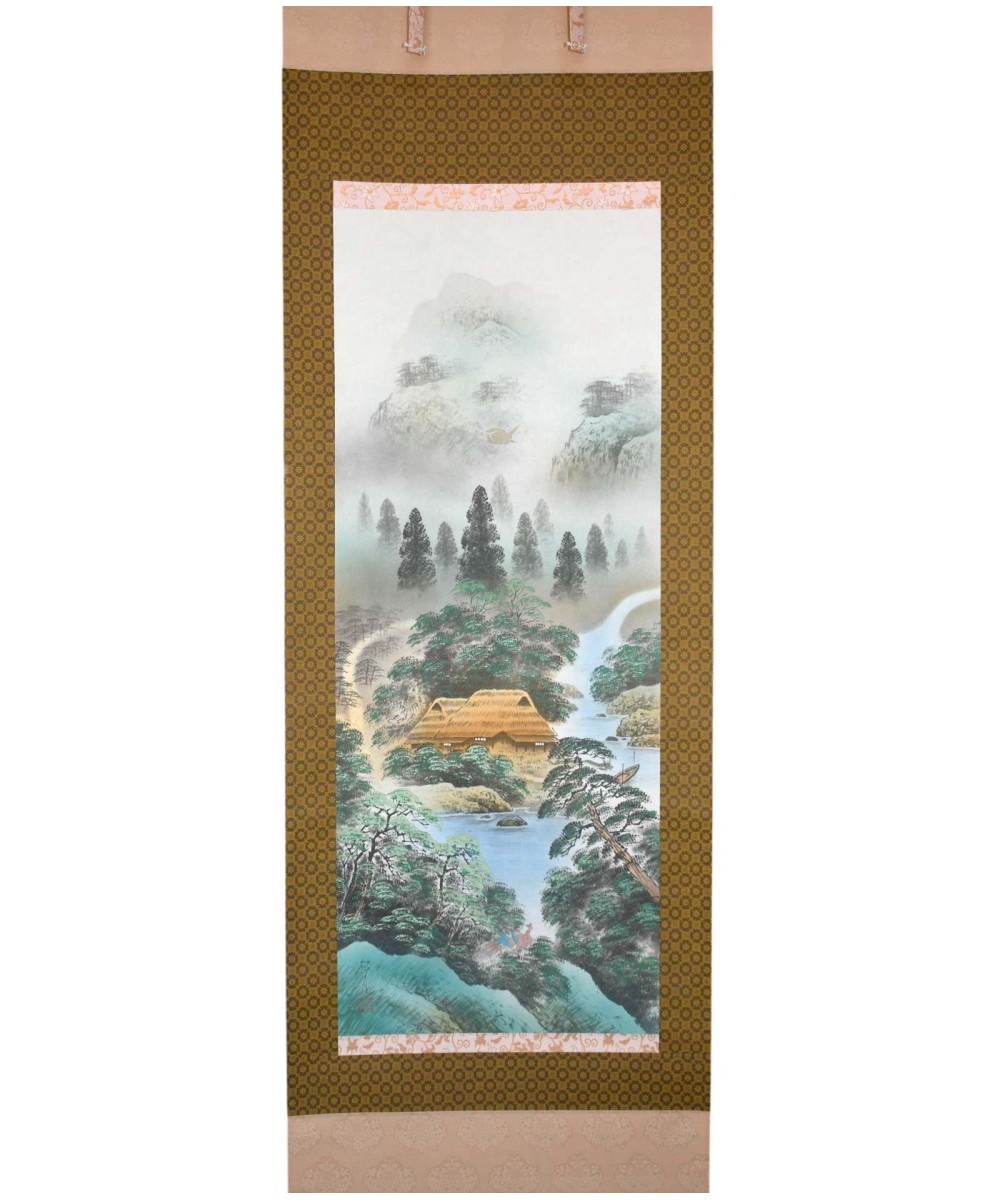
KAKEJIKU / KAKEMONO is a Japanese scroll featuring a refined natural landscape fading towards mist-shrouded mountain peaks. A timeless work of art that combines the serenity of nature with powerful spiritual and auspicious symbols, ideal for bringing harmony, depth, and a touch of authentic oriental elegance to any space.
The Landscape (Sansui)
The painting unfolds vertically, celebrating classic landscape painting (Sansui). In the foreground, a traditional Japanese thatched-roof house (kayabuki) stands out, immersed in lush nature, with streams, pine trees, and floral elements. As the gaze rises, the vegetation gives way to mountain peaks that delicately dissolve into the mist, creating a profound sense of tranquility, introspection, and infinity.
The Japanese Phoenix (Hōō)
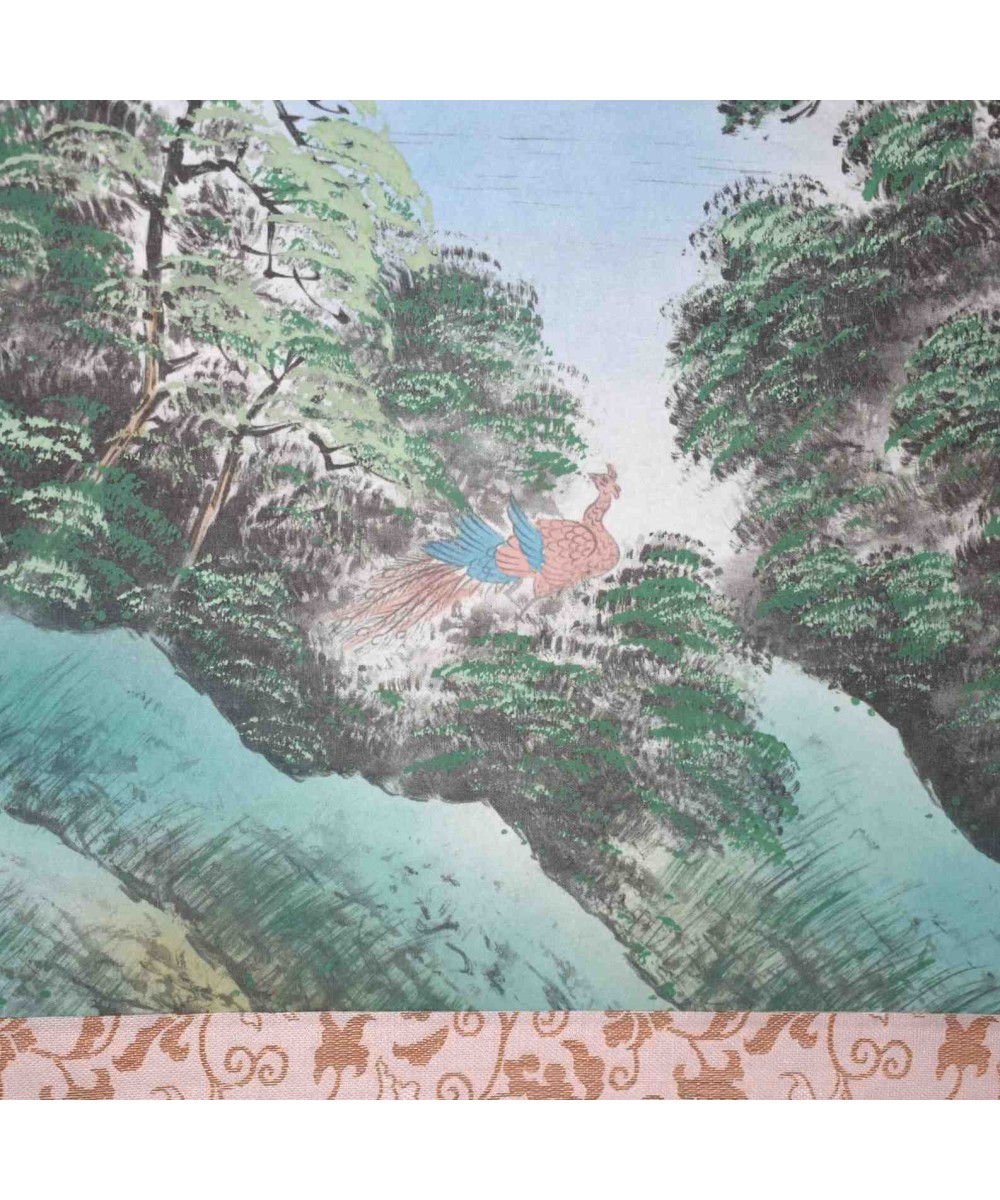
Standing gracefully among the dense treetops, the figure of the phoenix, the mythological celestial bird, stands out.
Wings spread in vibrant shades of azure blue that contrast beautifully with the pink hues of the body.
A very long, flowing, and feathered tail evokes the elegance of the peacock and the pheasant.
According to tradition, the phoenix is a pure and benevolent creature that manifests its presence on Earth only in times of absolute peace and harmony, making it an exceptional catalyst of positive energy for the home.
The Flaming Jewel (Hōju)
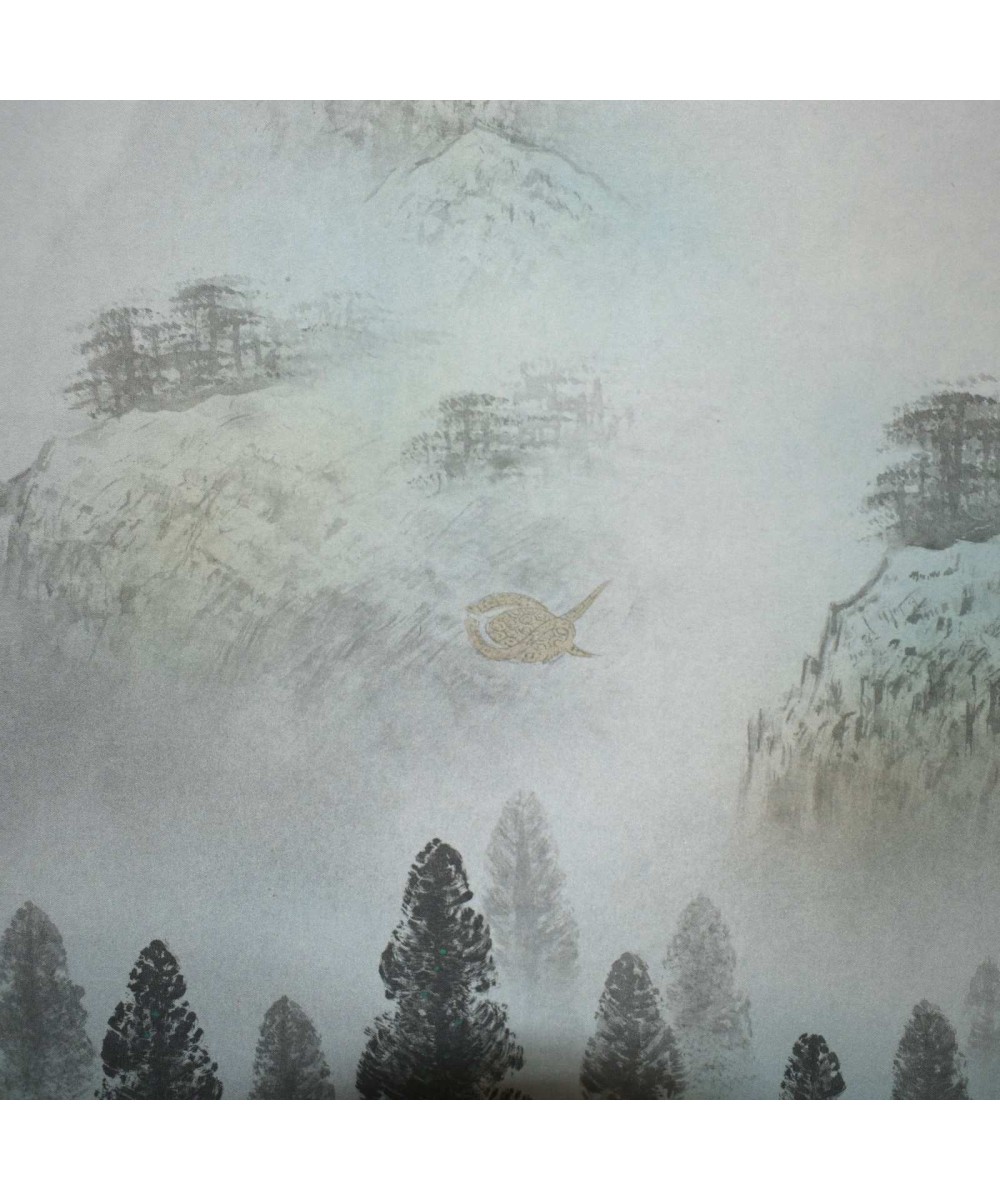
In perfect spiritual correspondence with the phoenix below, the upper part of the sky hosts, isolated among the clouds and above the highest peaks, the design of the Hōju, the sacred gem that grants the heart's desires and symbolizes wisdom and enlightenment.
The work blends the serenity of pristine nature with two of the most powerful and noble symbols of spiritual mythology.
A timeless piece of art that combines a refined aesthetic with a profound message of good wishes for rebirth, peace, and prosperity.
Note: Used item. Comes with its own packaging: a finished cardboard box.
Painting dimensions: 101 cm x 42 cm.
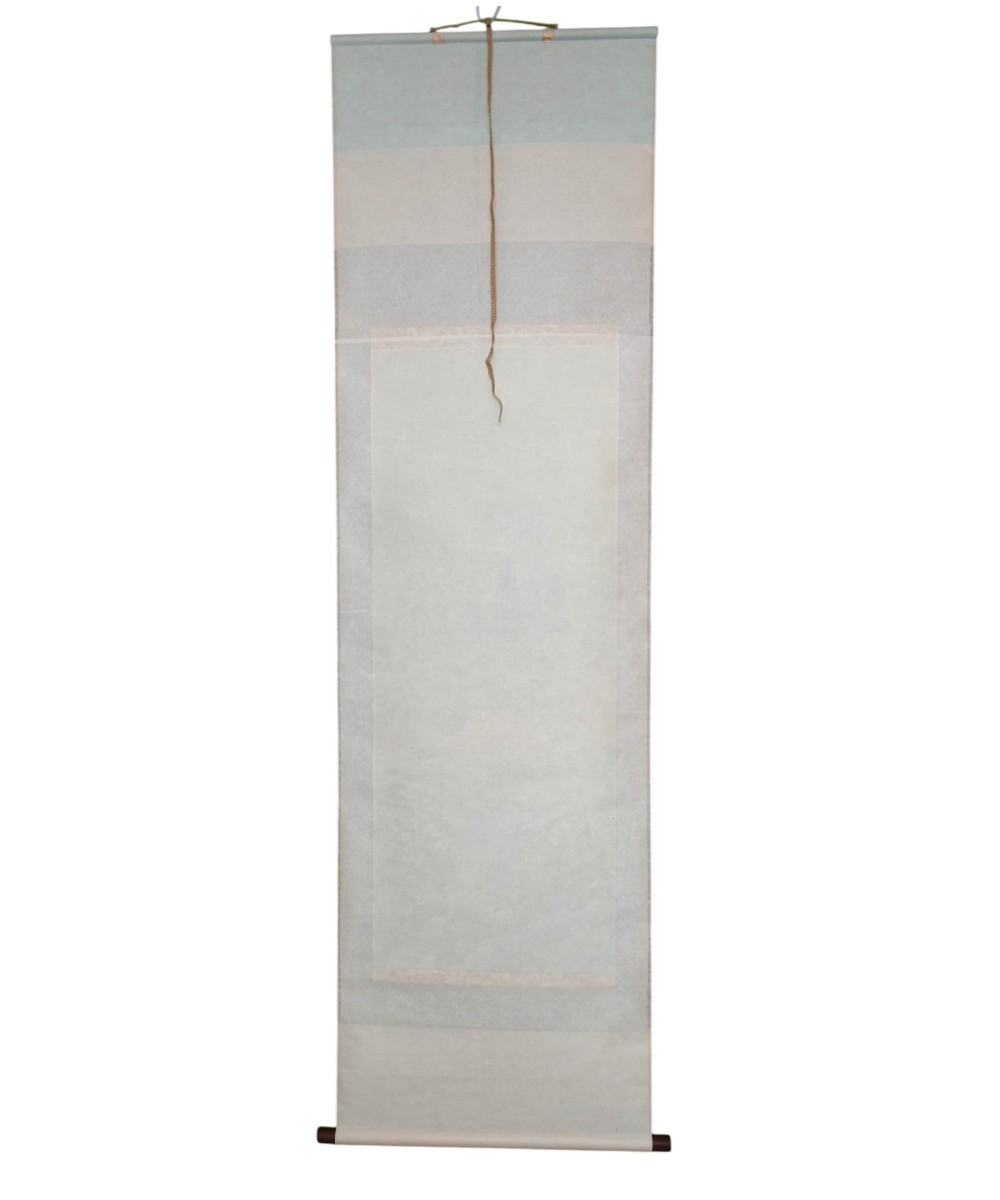
Roll dimensions: 182 cm x 52.5 cm. Materials: washi paper, silk, wood.
Use and Function
The kakemono's primary use is as an interior wall decoration, but it also has a profound, ritualistic meaning:
Temporary Display (Tokonoma): It is almost always displayed in the tokonoma (床の間), a raised niche and the most honored part of the main room of a traditional Japanese home.
Seasonal and Occasional Rotation: Its flexibility is crucial. The kakemono is hung only temporarily and then put away. Japanese families often own several, which are rotated according to:
Season: A spring floral motif will give way to a summer landscape or autumn calligraphy.
Special Occasions: To celebrate holidays, or when important guests visit.
Tea Ceremony: In the tea pavilion, a kakemono display is essential, and its design must be in keeping with the season or the spirit of the gathering, acting as a mediator between the host and his guests.
Aesthetic Harmony: In addition to painting or calligraphy itself, kakemono is often used in combination with other art forms in tokonoma, such as ikebana (flower arrangement) or bonsai, to create a single, harmonious scene that reflects the principles of wabi (rustic simplicity) and sabi (beauty of imperfection and aging).
Common Subjects: These range from landscapes (sansui), human figures (often religious or literary), naturalistic subjects such as flowers and birds (kachōga), to calligraphies featuring poems or Zen maxims.
*Click here to find out more.
Related Products


Kakemono / kakejiku Silk Hanging Scroll. This hand-painted painting depicts a tiger (Tora) sinuously..
€199.00
Latest


NOREN Japanese curtain with Daruma design and writing that means, now you must not give up.Note: the..
€38.90

FUROHIKI Square-shaped fabric furoshiki with Hokusai's Mount Fuji design. Furoshiki are ideal f..
€15.90

TENUGUI Fuku neko tanabata, maneki neko family on the "tanabata" holiday are preparing to attack the..
€17.90

TENUGUI Fuku neko design of samurai cats and 'samurai' ideogram. Rectangular fabric used as a decora..
€17.90

TENUGUI Fuku neko on the bridge, Benkei e Ushiwakamaru ninja maneki neko. Rectangular fabric used as..
€17.90

TENUGUI Sakura Nocturnal cherry blossoms and maneki neko, rectangular fabric used as decoration for ..
€17.90


CUP without handle or glass suitable for tea or sake with meals, with writing and relief drawin..
€15.90

BOWL Decorated with plum blossom designs on the outside, it features vivid colors and meticulous det..
€14.90
![Yukata checked pattern with flowers [Fumiko]](https://www.japanesestore.eu/image/cache/catalog/data/Yukata/Yukata-woman/Yukata_1/YD380-yukata-kimono-cotone-giapponese-450x600.jpg "Yukata checked pattern with flowers [Fumiko]")
![Yukata checked pattern with flowers [Fumiko]](https://www.japanesestore.eu/image/cache/catalog/data/Yukata/Yukata-woman/Yukata_1/YD380-yukata-kimono-giapponese-a-450x600.jpg "Yukata checked pattern with flowers [Fumiko]")
YUKATA Traditional summer long Japanese 'kimono' dress for women. Checked pattern fabric decora..
€47.90


KUROTOMESODE pure silk kimono in black with refined hand-made decorations, pine trees, flying c..
€230.00


HAORI Black jacket in fine silk decorated with a refined design, perfect for any outfit.The fab..
€95.00


GETA original flip-flops from Japan made of natural paulownia wood, with a carp flip-flop motif..
€38.90


GETA traditional thong sandals in light wood. The cotton "hanao" flip flops are comfortable an..
€35.90


GETA sandals made of natural light wood from the paulownia tree, dyed in black. The "hanao" flip-flo..
€36.90